

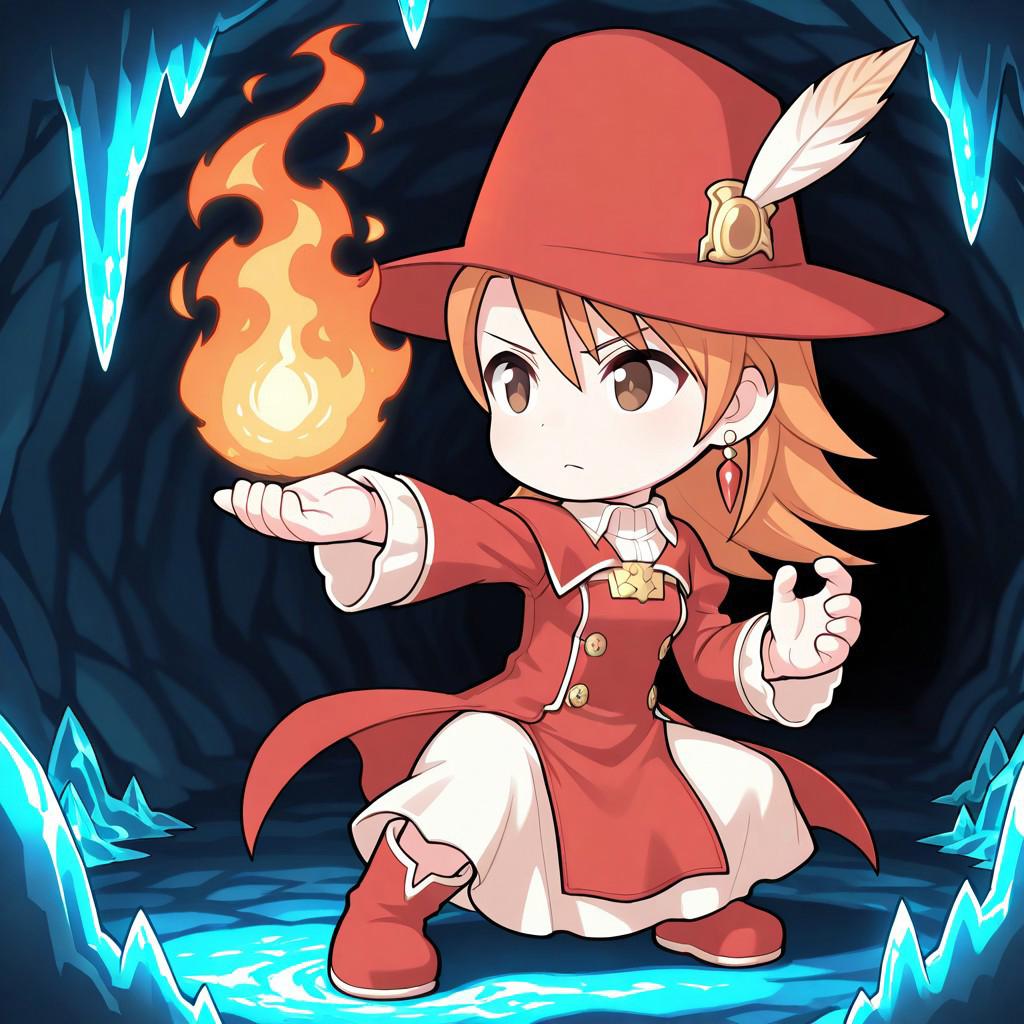
(Pictured: My Refia model, made from a very eclectic mix of data by necessity, is an example of a LoRA with a very low inherent style. As such it will adopt almost any style thrown at it with minimal fuss.)
When a LoRA is being trained, it’s being trained on patterns in the images its been fed. While basic data selection should mean that the differing images all contain the same character (for a character LoRA), if those images were all from the same source (e.g., all screenshots of a single work) or very similar sources (e.g., those screenshots plus official art of a single work) there’s another pattern the LoRA can and will learn from them: The shared style of those images. This is why character LoRAs often have an “inherent style” where images generated with them adopt (to varying degrees) the style of the work used to train them.
Having an inherent style is not necessarily a bad thing. Some characters are so heavily abstracted or designed integral to their style they are unrecognizable when drawn in other styles (western cartoons tend to be some of the most prominent examples of this), and more, while recognizable, still lose a lot without it. For cartoon women seeing them in their native style once their clothes are off is half the appeal of making the LoRA in the first place and seeing a generic woman with her features isn't nearly as fun. Having a strong inherent style also frees an end user from needing to separately control the style with additional LoRAs and tokens.
On the same coin, inherent style is not always an advantage. The big one is that it makes a character less likely to accept being bent into a different style, either from a LoRA or (especially) tags. Faults in the style can also be learned, with TV animation and artifacted data (e.g., poorly preserved old shows) particularly susceptible if data isn't handled with this in mind. Finally, while this article is talking about the subject relative to character LoRAs, other LoRA types such as poses or objects can also adopt inherent style, which is generally a negative for those (though memes that parody the style of a single image alongside its concept will want it).
Minimizing Inherent Style
There’s a few ways to minimize inherent style, and they all stack.
Using multiple art styles in training data
This one is straight forward: Simply include pictures from different artists. The style doesn’t need to be dramatically different, and even “anime” style fan art of anime characters is often sufficient due to differences in styles of individual artists. While simple, this is often easier said than done, especially for really obscure characters where data from the original source is the only data. Inversely, for some characters you have to do this, such as a character who was originally a bit part or from an older video game with minimal or repetitive in-game graphics, forcing half+ of your data to be fan art of varying style.
Tagging the art style(s)
Since LoRA making is comparing patterns in what the model already knows to what you’re giving it and trying to get closer with each epoch, one neat thing you can do is take advantage of styles your base model already knows by identifying your training data as those styles, causing it to learn the the style as the style you assigned to it rather than part of the character. This is particularly effective on “extreme” styles even a layman can identify at a glance, and you don’t want your LoRA to output uncommanded. Some tags should always be used this way to avoid artifacts in the final LoRA. These include “3D”, “chibi” (unless the character is always chibi), “pixel art”, “monochrome, greyscale”, “lineart” (with “settei” added when appropriate), “sketch”, and “photorealistic, photo (medium)”. Beyond those however many other relatively “normal” styles tags such as “anime screenshot” or "anime screencap" (the artifacts and shortcuts of a TV anime), “toon (style)” (less realistic “western cartoons” and similar comics.), “traditional media” (and their associated medium names), and “official art” (while this is not a true style tag in origin, the realities of training off Danbooru dumps mean it functions as one, calling “anime” art without the artifacts of "anime screen cap" and including some extra details like greater shading) all work. Even era tags (like “1980s (style)”) and some negative quality tags (For when an image genuinely does have those flaws. Generally a last resort and data should such data should either be discarded or fixed instead, but for lower data characters you often don’t have enough data to do that.) can all work to minimize the inherent style of a trained model. (I have a half finished article on these I need to finish, but I’m not super qualified on a lot of the minutia on actual art needed. I've since released a guide to the most common ones.)
Settings during training
I know this has an effect, but I don’t know it enough to tell you more than that it’s a thing since it’s not one I’ve played with much in a controlled manner. Dimension, optimizer, repeats, and checkpoint chosen as base model will all have an effect.
Maximizing Inherent Style
Using more, varied images from the same source
A pretty straight forward concept, but generally not one you want to do for the sole purpose of maximizing style: If you wanted to make a style LoRA, you’d make one. However I note it because it’s likely to occur incidentally, particularly if you’re trying to do something like including all of a character’s costumes in a single LoRA (don’t worry for just a few) and hit 100+ images (you can see this in action with my Cindy Vortex and Gadget & the Gadgetinis Penny LoRAs, which were made with well over 100 images to be able to include 9+ costumes). You can still do this intentionally during dataset selection to give a LoRA a nudge if your dataset would otherwise be relatively small (e.g., going from 20 images to 30 or 30 to 40).
Make that style LoRA
Style LoRAs can include characters within them and will, by definition, carry a style. To do this, “simply” make a style LoRA, but include in the dataset pictures of the characters you want tagged as though you’re making a character LoRA. As a practical matter, I really would recommend doing this the other way around though since trying to do this for more than just a few characters as a bonus is a quick way to burn yourself out. Make a bunch of character LoRAs from the same source material, then once you’ve done that combine them all together and add generalist data (minor characters, scenery, objects etc.) to make a style that can also do characters. When doing this, you want keep in mind to avoid overlaping tags between characters (for example, when possible instead of two characters both wearing “pants” that look nothing alike, use tags that are a subtype of pants like have one tagged “capri pants” and the other “jeans”). Also if you plan to host your resulting style model for training on Civitai, you probably don't want to be able to call "minor characters" as part of the style to avoid having your LoRA doomed to obscurity and uselessness at the demand of credit card companies (culling the triggers and identifying the character's age in tags for images should work to avoid that)
Cull off style images
Simply the inverse of the first point under minimizing. This is generally a consideration you make during initial data selection or something for trouble-shooting before a retrain, but it does count.
Tag off style images
The above bit on tagging styles applied in a different direction. This can help push a dataset with multiple styles towards defaulting to one if the “non-standard” ones have their styles tagged. For example, you can tag chibi images with “chibi” and the other images will become the default if chibi isn’t prompted (no need for negative most of the time).
Tag stuff outside the character
If you tag the background objects and type, the final LoRA will learn those a bit and thus learn the style as a whole a bit more.
Settings during training
As above, I know it’s a thing, but don’t know this part well enough to provide a walkthrough.
Checkpoint selection
I don’t know the exacts, but some checkpoints are better than others at maximizing the inherent style in a character LoRA. Hassaku XL 1.3a has become my default checkpoint since I’ve found it lets the inherent style of anime and cartoon stuff shine through when its present in a LoRA. The ultimate is probably the original version of your base model (e.g., Illustrious 0.1 for Illustrious), but that’s really only useful for diagnostic in most cases due to the other issues with using that as your base.
End
If you found the article useful and really want to thank me, take a look at my LoRAs (note several are hidden at demand of monopoly payment processors if you have X and/or XXX images set to visible), generate something neat with one and post it to the gallery with the "+ Add Post" button. It helps make back training costs and I love seeing what my stuff is used for.
If you know something I got wrong or missed, please tell me: I make these guides in the hopes people tell me how my knowledge is flawed or lacking, allowing me to improve as a creator.
Changelog
Nov 16 2025: Minor copy edits.
Feb 27 2026: Altered a reference to a guide I had started but hadn't yet finished to a link to a published article. Corrected an instance of walkthrough with a missing t.